Trauma-Informed Peace Work: Practices for High-Stress Environments
Background and Context
Peacebuilding practitioners are increasingly working in contexts marked by protracted crises, repeated cycles of violence, uncertainty, and rapid change. These realities not only affect the communities and partners with whom we work, but also shape the spaces in which dialogue, learning, collaboration, and peacebuilding efforts take place.
As part of its commitment to creating spaces for exchange, the Academy for Conflict Transformation invites practitioners, trainers, facilitators, alumni, and partners to explore around a topic that is gaining increasing relevance across peacebuilding contexts, “Trauma-Informed Peace Work: Practices for High-Stress Environments”.
This 2.5-hour interactive workshop offers an opportunity to learn from experienced practitioners, exchange perspectives across different contexts, and reflect on how we can navigate complex realities while remaining responsive to the needs of the people and communities we work with.
Date: 01.07.2026 Time: 09:30 CEST for 2.5 hours Setting: Workshop Deadline for registration: 24.06.2026
The Trainers:
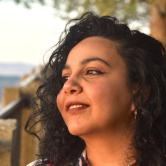
Aida Hussein
Baraa Hatoum
The moderator:
Catrin Fröhlich
Trauma-Informed Peace Work: Practices for High-Stress Environments
As peace workers, trainers and facilitators we often encounter the manifestations, symptoms and impacts of trauma and violence in trainings, meetings and just about any communication. They might show up as triggers, tensions, tears, silences, withdrawal, delays, or a ‘lack’ of creativity, strategy, focus or ‘lack of’ motivation, patience or energy.
No matter if we facilitate a training, a team process or a partner meeting, some (re-)actions can be more easily recognized as trauma- and stress-responses while at other times we simply sense that something remains unspoken in the room, something that keeps derailing us away from the agenda or prevents the ‘real’ conversations.
In this interactive workshop, drawing on their experience facilitating peacebuilding initiatives in Lebanon and the wider region throughout more stable periods but also through periods of escalation, crisis and violence, the trainers Baraa and Aida will share how they navigate such dynamics and try to build trust among participants.
Through practical examples and exercises as well as joint reflections, participants will explore…:
how to sharpen our awareness for the less visible signals and dynamics at play
some of the ‘easier’ exercises that are useful for co-creating safety, trust and connection
the importance of hope, power awareness, systemic thinking and our own capacity for self-reflection and deep presence (depending on time and interest)
In the spirit of trauma-sensitivity, participants are invited to share their interests, questions and priorities in the registration form. These inputs will help shape the session and ensure it responds to participants’ needs and experiences.
While the workshop will provide a clear structure, the facilitators will also remain attentive to emerging questions and dynamics during the session. For those who wish to continue the conversation, our trainers will stay for an additional 30 minutes after the workshop.