After completing a bachelor’s degree in Business Administration, Jil Ostendorf worked in the hospitality industry for several years and spent extended periods abroad. While looking for a new professional direction, she came across the part-time course in Peace and Conflict Work. She eventually took part in the course in 2025 and successfully completed it.
“My main expectation was to gain an insight into the field of peace work, learn something completely new and meet people who work in this field. All of these expectations were met.”
Jil OstendorfGraduate of the 2025 part-time course
Jil’s desire for a change grew over time. “I really enjoy my work at the café, but in the long run, it is physically quite demanding, and I had been looking for something more meaningful for a long time,” she explains. She adds: “I also lived in Israel for a year, and since the war began, the issue has come up for me very frequently. So I started engaging with these topics very intensively. That’s how I came across the programme and realised how much these issues interested me.”
Jil discovered the course through her own online research. She was specifically looking for something unrelated to her degree in Business Administration. “I thought to myself: This course is perfect for me. The scope is just right, it’s close to where I live, the topics sound really interesting, and the cost is absolutely reasonable. I liked the combination of online and in-person seminars. After thinking about it for a month, I decided to apply,” she says.
At the beginning, she mainly hoped to gain an insight into the field of peace work, learn something completely new and meet people working in the field. “All of these expectations were met,” Jil says. At first, however, she felt somewhat insecure about being the only participant without a professional background in the field. “At first, I thought I wouldn’t be able to contribute anything and wondered whether I really belonged there. But looking back, I never questioned my decision. Quite the opposite: I actually found it enriching because I constantly felt like I was learning something new.”
Jil found the combination of online and in-person phases particularly successful: “The combination was really ideal. Especially because we continued to stay in touch with the group during the online phase through joint projects. So for me, the format was perfect.”
The coaching sessions with one of the course’s lead trainers were particularly memorable for her. “I’ll probably never forget them because they were so great. Especially because she had known me for quite some time and was able to bring all of her background knowledge and experience into the sessions,” Jil recalls. She was also enthusiastic about exploring her own approach to conflict: “I learned a lot about conflicts and my own way of dealing with them this year. I can already see changes in my own behaviour and in the way I perceive things.”
Her conclusion: “I would definitely recommend the course to anyone who wants to gain an entry point into the field of peace work. Especially if you want to develop yourself further and explore a wide range of different topics, such as racism and gender theories. That’s why I would also recommend the course to people coming from a different professional background.”
And what about her future? “Professionally, I could imagine working on a volunteer project abroad at some point, or taking on a mini-job in the social sector or working with refugees. These are topics that interest me, and I also feel that I now have more skills and knowledge in these areas.”
We wish Jil every success and all the best for the future!
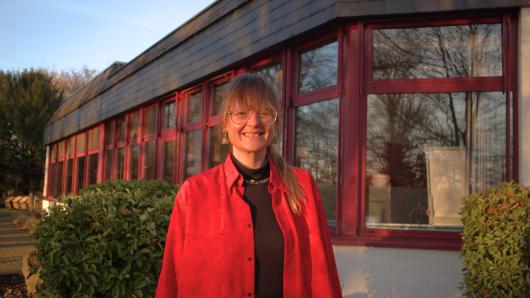 Jil Ostendorf Graduate of the 2025 part-time course